
Joni Mitchell Mercury Poisoned

http://www.livescience.com/50359-joni-mitchell-morgellons-disease.html

Quoted from the above article:

If Morgellons is indeed related to a psychiatric condition, drug use may be a contributing factor, the researchers said. In the hair samples in 50 percent of patients in the study, the researchers found evidence of the use of drugs such as marijuana, amphetamines and benzodiazepines (which are used to treat people with anxiety and insomnia).

Mercury poisoning messes with the ability to produce enzymes for normal body chemistry, so it's not surprising we would see a higher incidence of drug use as the sufferer attempts to stabilize their own body chemistry.


http://en.wikipedia.org/wiki/Mercury_poisoning
Common symptoms of mercury poisoning include peripheral neuropathy (presenting as paresthesia or itching, burning or pain)



EPA Declares Missing Mercury an Enigma?

Who exactly to they think they're fooling?

The EPA declared that "the fate of all the mercury consumed at mercury-cell chlor-alkali plants remains somewhat of an enigma." 

In the U.S., consumption of corn sweeteners is ~ 80 lbs per person.

Roughly 75% of that is high fructose corn syrup

High fructose corn syrup is created in a corn wet-milling process.

Chemicals for this process are made at chlor-alkali plants.

Older chlor-alkali plants utilize a "mercury cell" process.

The process electrolyzes saltwater and produces sodium hypochlorite (NaOCl).

The same plants also creates sodium hydroxide (NaOH), often called lye or caustic soda.

The process takes place in an electrolytic cell, where liquid mercury (Hg) acts as a cathode.

Hg attracts sodium (Na) cations to form an amalgam.

NaOCl gas collects at a graphite anode.

The amalgam is added to water where Na reacts to form NaOH and H.

Hg gets left behind and reused.

Mercury is highly volatile and contamination occurs throughout the process.

Both the product and the wastewater stream end up containing some mercury.

This report documents 65 tons of mercury lost during one year of production at nine chlor-alkali plants in the U.S.

Similarly 96 tons of mercury were lost at plants in Europe.

The EPA declared that "the fate of all the mercury consumed at mercury-cell chlor-alkali plants remains somewhat of an enigma."


Mercury Creates Obesity

Many human bodies that are mercury toxic deal with the toxicity by making fat cells in which to store the mercury.

You Know What They Say about Corn Syrup...that It has Mercury in it.

Despite claims by the Corn Refiner Association to the contrary, there are in fact problems with high fructose corn syrup (HFCS). In addition to being a major contributor to epidemic obesity and diabetes rates, you can add the presence of mercury to the growing list of reasons why HFCS is dangerous in any amount.
According to a recent Mother Jones article, in 2004 when FDA researcher Renee Dufault found mercury in HFCS samples from leading manufacturers, they did what any agency looking to protect public health would do: they asked her to stop her inquiry. The source of the mercury is thought to be lye, which is used to separate the cornstarch from the kernel. Many chemical companies make lye by pumping salt through large vats of mercury. That mercury-laced lye is most likely the same lye used in processing corn to make HFCS.
After the FDA tried to stymie Dufault’s inquiry, she decided pursue the matter further, sending the original 20 samples to be retested; nearly half of the samples contained mercury. This past January, Dufault published her findings in the peer-reviewed journal Environmental Health.
At issue between Dufault’s and the FDA’s claims is the what form the mercury is present—whether it’s elemental, inorganic or organic. The FDA, supposedly without any scientific substantiation, claims the mercury found was the relatively benign elemental form. Unfortunately, Dufault and her colleagues’ findings were inconclusive as to sample HFCS’s form, but they believed there was strong evidence that it might be the most harmful organic variety, whose property of easy absorption makes it particularly dangerous. If the mercury were organic, the amounts found would constitute a major health risk (particularly children, pregnant women, women who plan to become pregnant, and nursing mothers) for Americans whose insatiable appetite for sweetness and convenience leads them to consume average 50 grams of HFCS daily.
Putting aside how crummy refined sugar products like HFCS are for your health, the chance that Dufault et al might be right about the mercury, coupled with the the FDA's sketchiness should be sufficient reason to pass on the cookies and soda.
Via Mother Jones
Read More on HFCS:
High Fructose Corn Syrup Producers on a Roll
Review: King Corn- You Are What You Eat
Corn Syrup vs. Sugar: Which is sweeter for your diet?

Original Post:
http://www.treehugger.com/green-food/you-know-what-they-say-about-corn-syrupthat-it-has-mercury-in-it.html

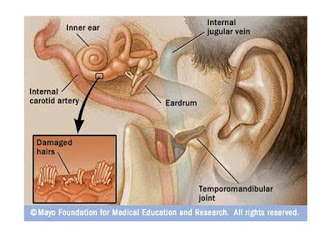
Tinnitus and Mercury Poisoning

I had ringing in my ears all of my life until about 6 months ago.  Now it comes and goes, but I'm still chelating for mercury poisoning.


Check out this page.
http://www.tinnitustalk.com/threads/heavy-metal-poisoning-can-cause-tinnitus.292/

Here is an excerpt.

What are the Symptoms of Heavy Metal Toxicity?
As Heavy Metals affect many organs and functions of the body, they elicit complaints and symptoms that are different from person to person and do not easily fit into the usual diagnostic categories. Therefore they often are difficult to diagnose. Here are some of the symptoms of chronic mercury toxicity:

  • Nervous System: Irritability, low concentration, memory loss, insomnia, depression, anxiety, tingling of the extremities, tremors, disturbed sense of smell and taste (metallic taste), unexplained burning sensation or numbness, pain, headaches, fatigue, tinnitus.
  • Immune System: Chronic or frequent viral, bacterial or fungal (Candida) infections, autoimmune disorders, allergies. The EPA has determined that methyl-mercury is a possible human carcinogen.
  • Cardiovascular: Abnormal heart rhythm, high blood pressure, cardiomyopathy.
  • Skin: Eczema, allergies.
  • Endocrine System: Hypothyroidism, hypoglycemia, adrenal disease, infertility.
  • Gastrointestinal: Food sensitivities, bacterial or fungal overgrowth, recurrent parasitic infections, abdominal cramps, irritable bowl symptoms.
  • Systemic: Premature aging, fatigue, fibromyalgia.